
Is Domination Inevitable?

Reimagining Power, Culture, and the Human Future
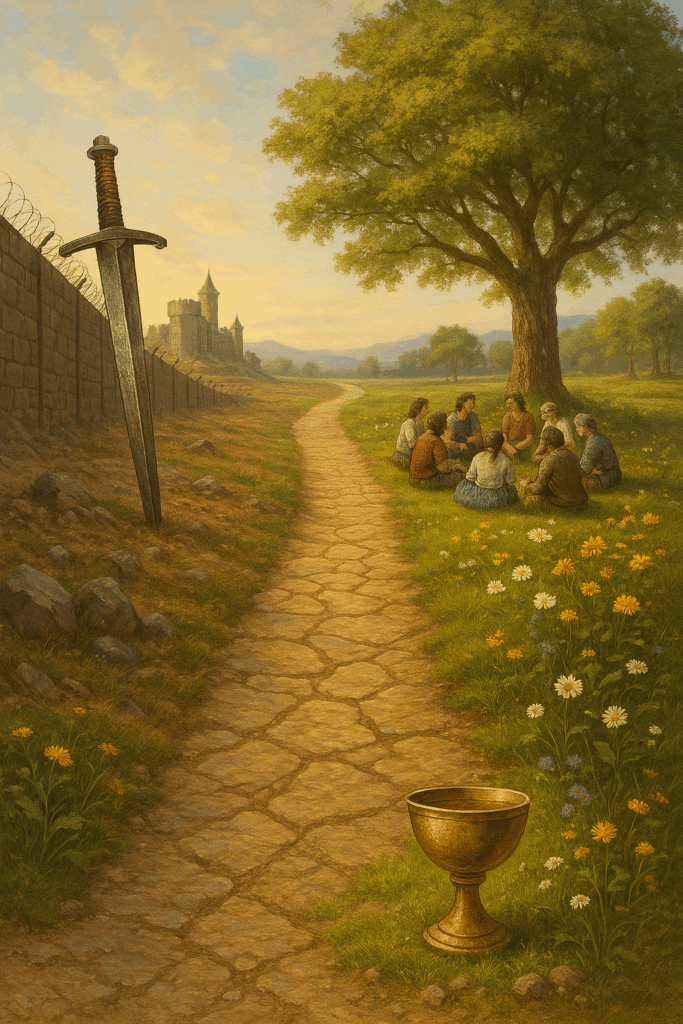
Symbolic crossroads showing two worldviews: on the left, a dark walled fortress with a giant sword symbolising domination; on the right, a vibrant meadow where people gather in a circle under a tree, with a golden chalice in the foreground representing partnership, community, and reverence for life.

Riane Eisler’s The Chalice and the Blade challenges one of the deepest assumptions of our culture: that domination and hierarchy are inevitable. First published in 1987, the book argues that human societies have not always lived by the blade. There is another model available to us – symbolised by the chalice – where cooperation, equality, and reverence for life form the foundation of community.

Eisler drew on archaeological evidence from Neolithic Europe to suggest that early cultures may have embodied this partnership model. While her interpretations have been debated, the bigger point remains: partnership is not fantasy. Indigenous societies around the world show us that chalice values – reciprocity, kinship, consensus – are part of our human inheritance.

Almost four decades later, Eisler’s vision is still urgent. Climate crisis, inequality, and division show the costs of the dominator worldview. Yet we face a choice: do we continue with the blade, or do we cultivate the chalice?

My review explores Eisler’s two models and why the chalice still calls to us today.

Read the full review

If this resonates, you might also enjoy my series Beyond the Dominant Paradigm which digs deeper into the cultural patterns Eisler challenges.
From What Is to What If

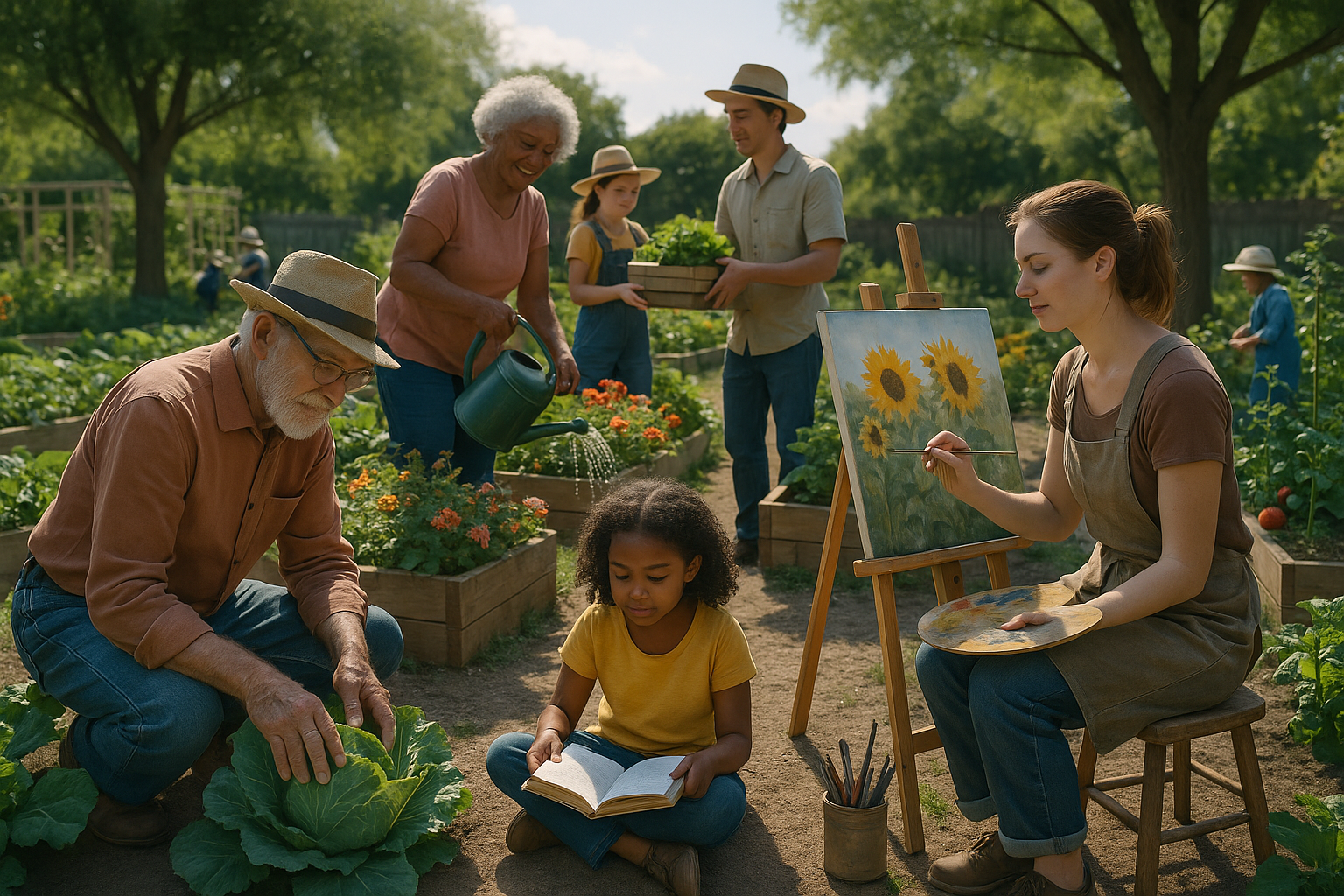
Flourishing community garden. People of all ages work together growing food, reading, and creating art under warm sunlight, symbolizing imagination, renewal, and resilience.

What if imagination was the most powerful tool we had to change the world? In From What Is to What If, Rob Hopkins argues that our greatest crisis is not just climate change or inequality, but a failure of imagination. Without the ability to picture different futures, we remain stuck in systems that no longer serve us.

Hopkins, co-founder of the Transition Town movement, invites us to move beyond “what is” and dare to ask “what if?”: What if our towns were designed around connection rather than consumption? What if prosperity was measured by well-being and ecological health instead of GDP? What if schools encouraged curiosity instead of conformity?

The book is filled with inspiring examples of communities already living these questions. From urban farms to community-owned energy projects, Hopkins shows that imagination is not a dream but a practical force for cultural change. His stories remind us that creativity and play are not distractions – they are essential to survival and resilience.

What makes this book compelling is its balance of hope and urgency. Hopkins does not deny the gravity of the crises we face, but he insists that hope grows when people come together to dream and act.

For me, From What Is to What If resonates deeply with my Beyond the Dominant Paradigm series. It challenges the cultural assumptions that keep us trapped in “business as usual” and affirms that bold change begins with the courage to imagine otherwise.

👉 Read my full review here

Don’t want to miss a post?
Sign up for the monthly roundup and get new blogs and reviews delivered straight to your inbox.

👉 Send me the roundup