
Reimagining Power, Culture, and the Human Future
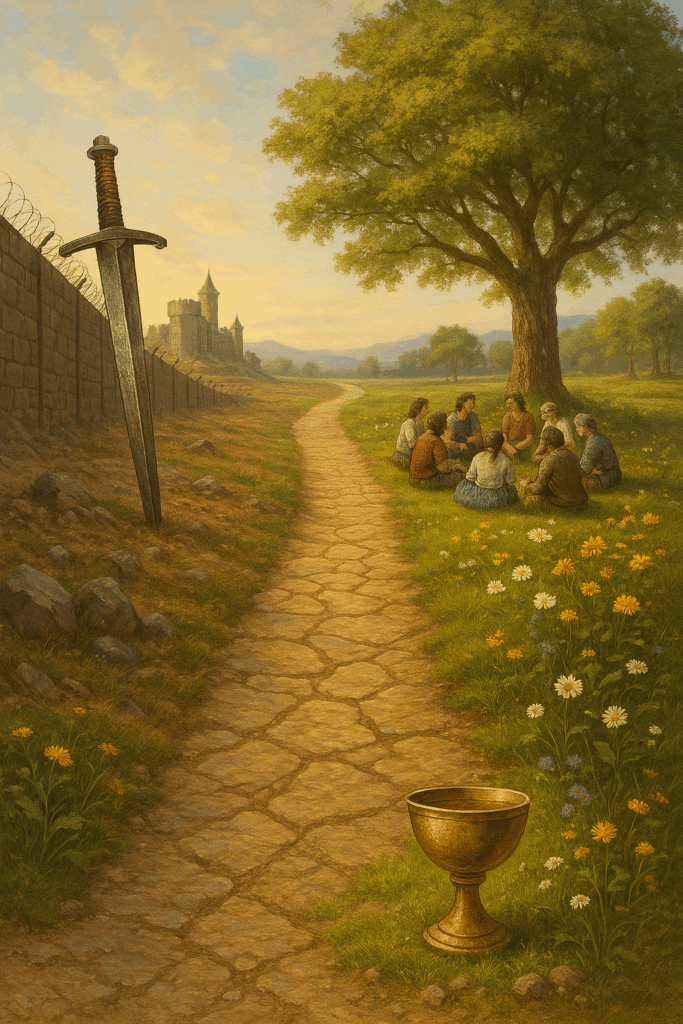
Riane Eisler’s The Chalice and the Blade challenges one of the deepest assumptions of our culture: that domination and hierarchy are inevitable. First published in 1987, the book argues that human societies have not always lived by the blade. There is another model available to us – symbolised by the chalice – where cooperation, equality, and reverence for life form the foundation of community.
Eisler drew on archaeological evidence from Neolithic Europe to suggest that early cultures may have embodied this partnership model. While her interpretations have been debated, the bigger point remains: partnership is not fantasy. Indigenous societies around the world show us that chalice values – reciprocity, kinship, consensus – are part of our human inheritance.
Almost four decades later, Eisler’s vision is still urgent. Climate crisis, inequality, and division show the costs of the dominator worldview. Yet we face a choice: do we continue with the blade, or do we cultivate the chalice?
My review explores Eisler’s two models and why the chalice still calls to us today.
If this resonates, you might also enjoy my series Beyond the Dominant Paradigm which digs deeper into the cultural patterns Eisler challenges.