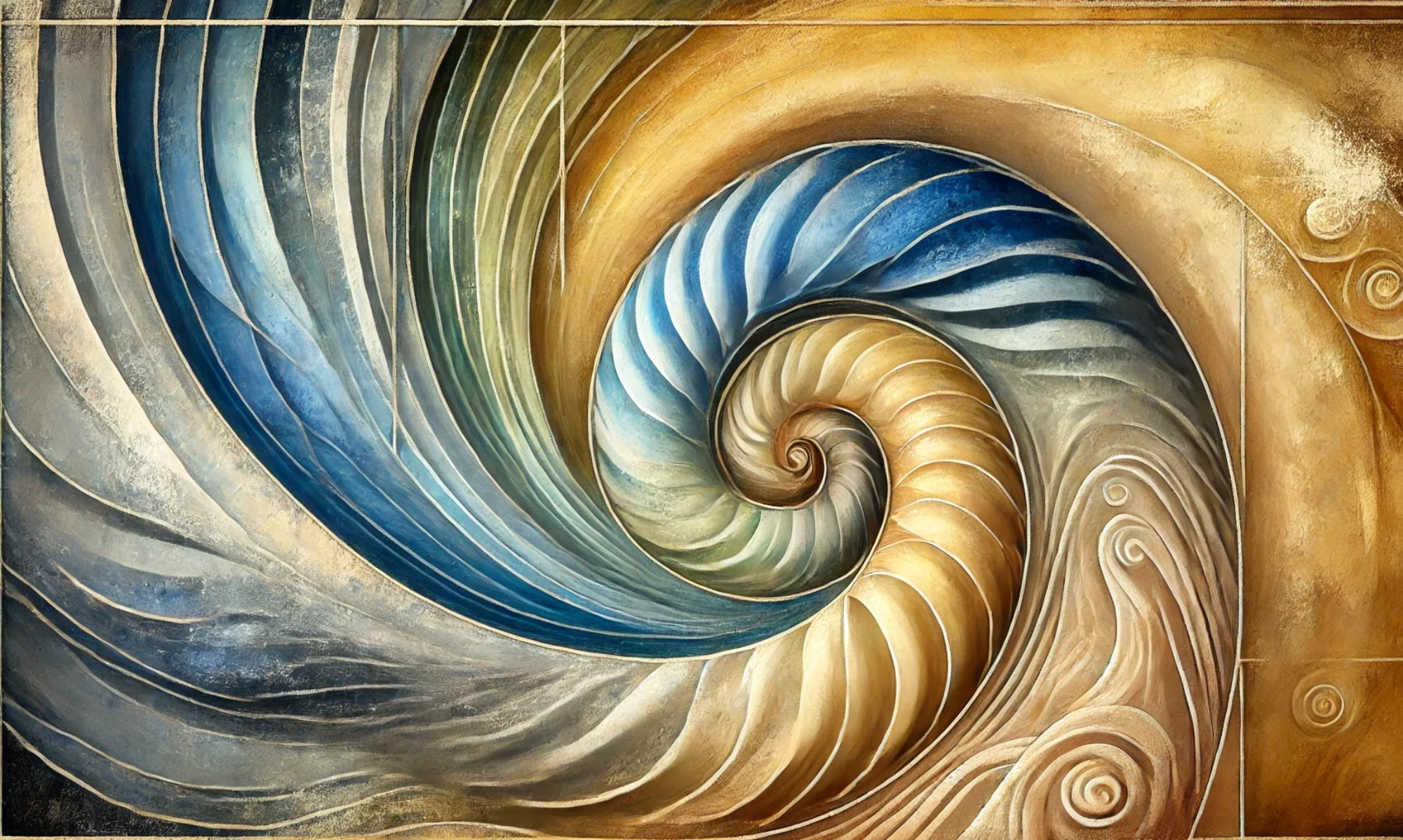
Mihaly Csikszentmihalyi’s Flow: The Psychology of Optimal Experience (1990) remains one of the most influential works in positive psychology. At its core is a deceptively simple idea: our deepest satisfaction comes not from leisure or consumption but from moments of full absorption, when challenge and skill are perfectly matched. This state – flow – is when time seems to vanish, self-consciousness fades, and we are fully present in the act of living.
What Flow Is – and What It Isn’t
Csikszentmihalyi distinguishes flow from both idle pleasure and grinding effort. Flow is not passive entertainment, nor is it external achievement. It is a form of active engagement where the doing itself is the reward. Whether painting, gardening, coding, teaching, or climbing a mountain, flow arises when our abilities are stretched but not overwhelmed.
Why It Matters in a Culture of Distraction
In a world driven by speed and external metrics, Flow offers a countercultural vision of fulfilment. Rather than chasing happiness through consumption or status, Csikszentmihalyi argues that meaning arises from intrinsically motivated activity. His work resonates strongly with today’s crisis of attention: when our focus is commodified, choosing flow is itself a quiet act of resistance.
Personal Reflections
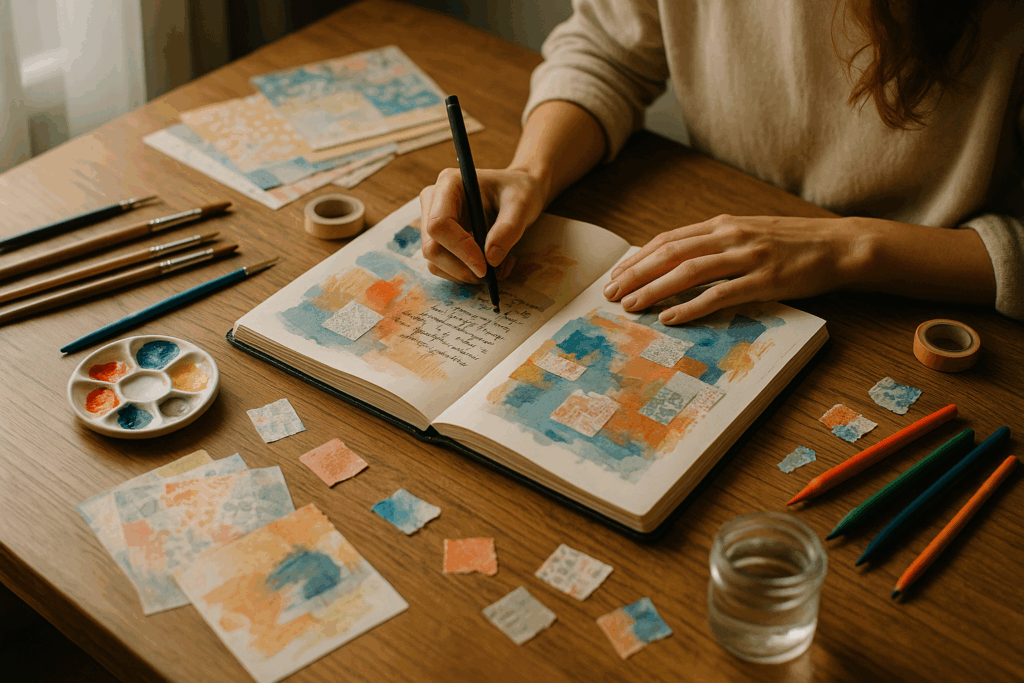
For me, the idea of flow is closely tied to my own art journaling practice. I don’t create with the aim of selling my work or building an audience- it isn’t about outcomes at all. I do it because I enjoy the process: the feel of paper and colour, the act of layering and experimenting, the quiet absorption that comes when I lose myself in the page.
Csikszentmihalyi’s description of flow captures this perfectly. The joy lies in the activity itself, not in external recognition. My art journals are a space where time slows, self-consciousness fades, and I reconnect with the simple pleasure of creating for its own sake.
Archetypes in Flow
The Disciple archetype isn’t only about spiritual following- it also speaks to anyone who devotes themselves to a practice, whether that’s learning an instrument, training in a craft, or studying a subject deeply over time.
The Artist, too, embodies this spirit – not as an elite creator, but as anyone who gives themselves to the creative process with integrity and love.
Reflective Questions
- When was the last time you lost yourself in an activity and felt truly absorbed?
- Which pursuits in your life bring you into flow most naturally?
- What might it look like to structure your life around more flow moments, rather than external outcomes?
If you’d like to explore how flow connects to your own passions and life purpose, you’ll find dedicated activities on this in the Passions module of the Soulful Path to Life Purpose programme.
If you’re drawn to books that explore presence, meaning, and the inner landscape of a well-lived life, you’ll find more titles gathered under my Soulful Living & Inner Growth theme. This collection brings together works that illuminate how we grow inwardly, reconnect with ourselves, and cultivate a more grounded, reflective way of being.